Why Whittier homes end up needing more than a snake
Most of the homes we hear from in Whittier fall into two groups. Closer to Uptown and the historic districts, many houses date from the 1900s through the 1930s, and their original sewer laterals are often vitrified clay with joints every few feet. Farther east and south — East Whittier, Friendly Hills, Whittwood and South Whittier — much of the housing went up in the 1950s and 1960s, when orange and walnut groves were subdivided. Those homes commonly have cast-iron drains under the slab or crawlspace and clay laterals out to the street.
Both pipe types collect buildup in ways a cable snake doesn’t really fix. A snake bores a hole through a blockage so water can pass. Grease that has coated the pipe wall, mineral scale inside cast iron, and fine root hair at clay joints stay behind, and the clog rebuilds around them. Hydro jetting scours the full circumference of the pipe instead, which is why it is often the better choice when the same drain keeps coming back.
What residential hydro jetting can clear
Kitchen grease lines
Cooking fats cool and harden on the pipe wall between the sink and the main. Jetting removes the coating, not just the plug.
Laundry line lint & soap
Lint and detergent residue build a felt-like lining in laundry branches, especially on older galvanized or cast-iron runs.
Root hair at clay joints
Fine roots from mature citrus, ficus and shade trees enter old clay joints. A root-cutting nozzle clears them back to the pipe wall.
Sludge & settled debris
Low spots and long, flat runs collect sediment, wipes and paper that a snake slides past.
How a residential appointment works
- Symptom review. Which fixtures are slow, whether the toilets gurgle when the washer drains, and how often you have had the line cleared before. A single slow sink points to a branch line; several fixtures at once points to the main.
- Access. We look for an exterior cleanout — usually near the foundation on the side of the house where the sewer exits. If there isn’t one, access options (a roof vent, a pulled toilet, or a new cleanout) are discussed before any work begins.
- Pipe check. When the history or the age of the home raises questions, a sewer camera inspection is recommended before jetting so cracks, offsets, collapsed sections or Orangeburg pipe aren’t made worse.
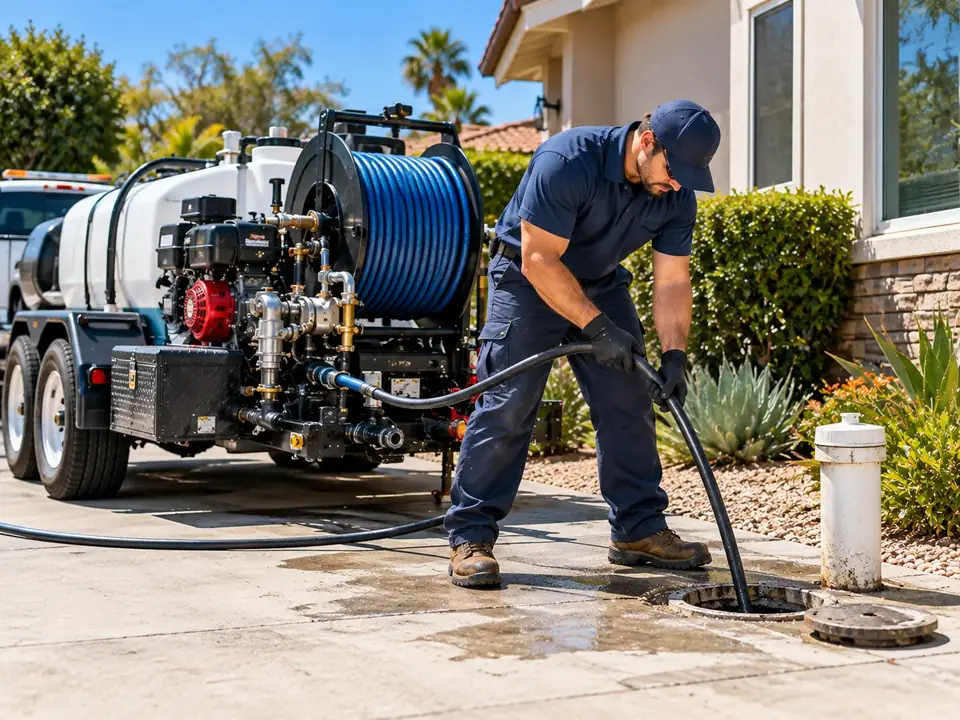
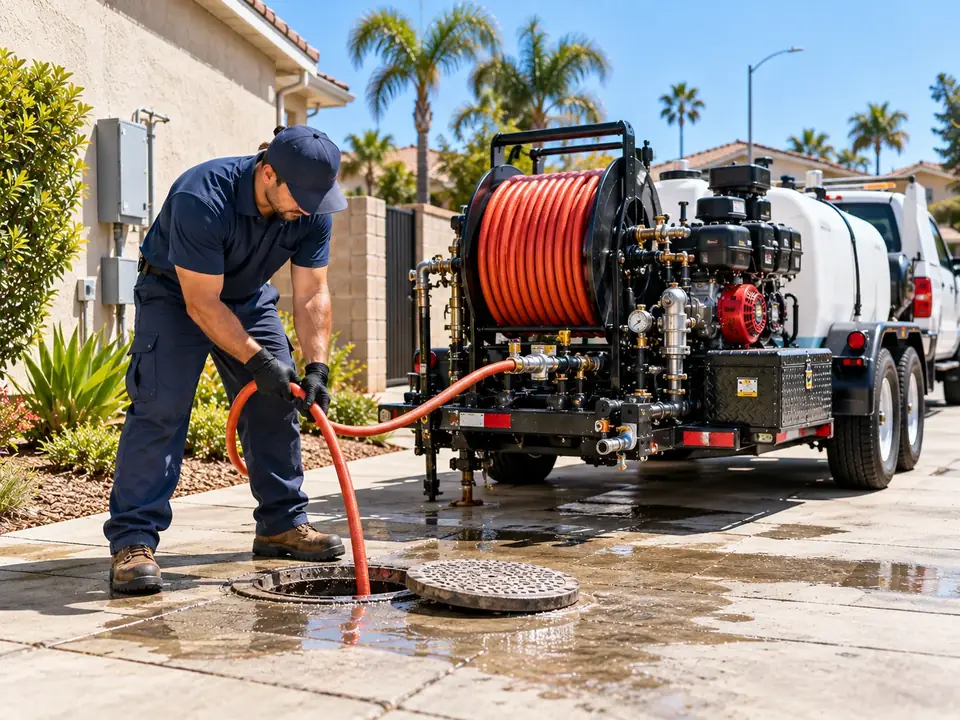
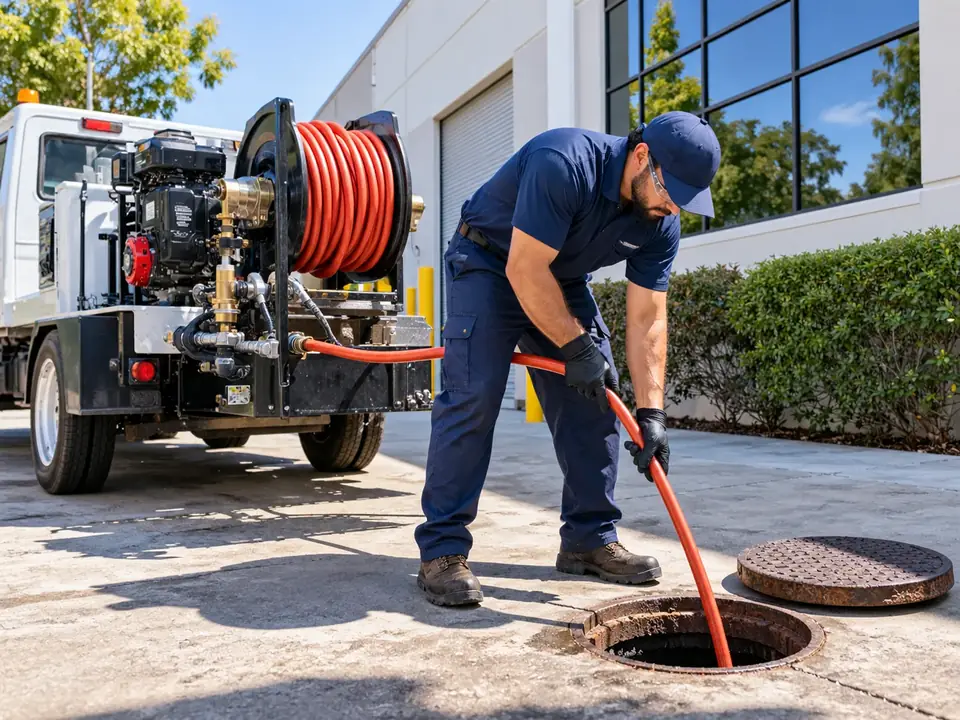
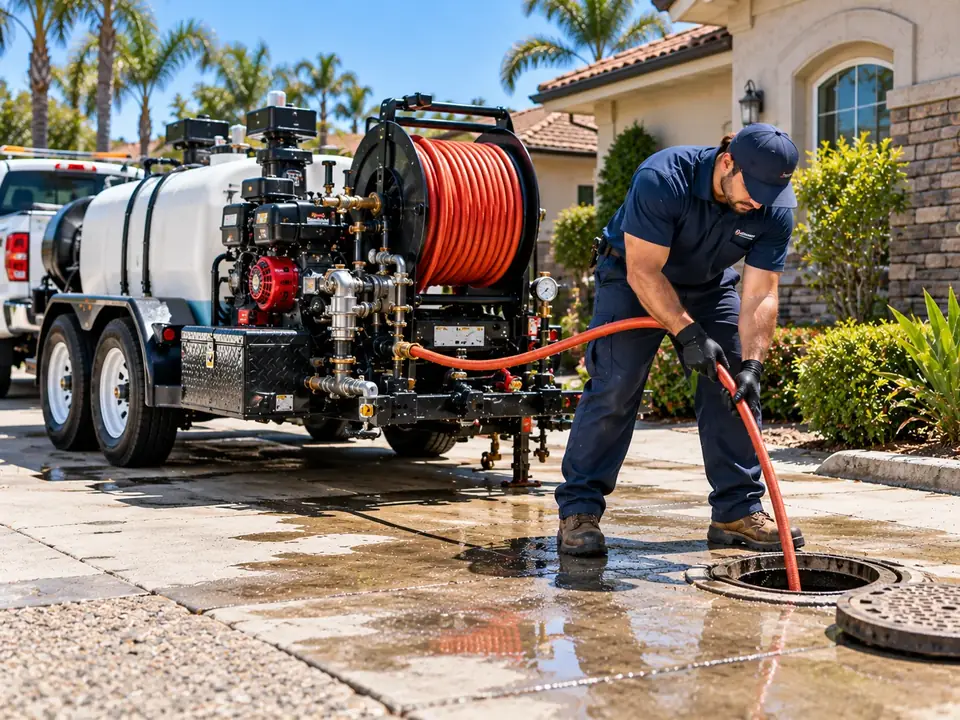
- Jetting. The hose is fed upstream or downstream depending on the line, and the nozzle, pressure and flow are matched to the pipe’s size and material. Residential lines typically fall in the 1,500–4,000 PSI range, with smaller interior drains at the low end.
- Verification & walkthrough. Fixtures are run to confirm flow, and you get a plain explanation of what was removed and anything we saw that deserves attention.
That pattern usually means buildup is lining the pipe. Call and we’ll talk through whether jetting fits your home.
When hydro jetting is not the right call for a house
Being honest about this is what keeps homeowners from paying twice. We will recommend something other than jetting — or something before it — when:
- A camera shows a collapsed, badly offset or separated section of pipe. Water pressure cannot fix a structural break, and jetting at that point can wash soil into the line.
- The lateral is Orangeburg (bituminous fiber pipe used in some mid-century construction). It deforms with age and is not a good candidate for high-pressure cleaning.
- The blockage is a single foreign object, such as a toy or a hardened mass of wipes at the toilet flange — a snake or direct removal is faster and cheaper.
- The cast-iron drain is so thin from corrosion that it needs replacement or lining rather than cleaning.
Preparing your home for a jetting visit
- Clear a path to the cleanout and the area where the jetter will park — usually the driveway.
- Avoid running dishwashers, washing machines and showers once a line is backing up.
- If you know of previous camera footage or a past repair, have it handy. It shortens diagnosis.
- Let us know about any recent remodel, ADU connection or plumbing work tied into the sewer line.
Keeping the line clear afterward
A clean pipe stays clean longer when grease goes in the trash, only toilet paper goes in the toilet, and kitchen strainers stay in place. Homes with large trees near the sewer path may benefit from a scheduled check every one to two years; see our preventive drain maintenance page for how intervals are set based on what the camera shows rather than guesswork.
Serving Whittier neighborhoods
Residential Hydro Jetting is available throughout Whittier ZIP codes 90601–90606, including Uptown Whittier, East Whittier, South Whittier, West Whittier, Whittwood, Michigan Park, The Quad, Friendly Hills, Valla. Call with your address to confirm scheduling.
Frequently asked questions
Is hydro jetting safe for an older Whittier home?
Often, yes — but age alone doesn’t decide it. Clay and cast-iron lines in good condition are routinely jetted at controlled pressure. Damaged, offset, Orangeburg or severely corroded pipe needs a different approach, which is why a camera check is recommended when the condition is unknown.
Will jetting make a mess inside my house?
Main sewer jetting is normally done from an exterior cleanout, so the work stays outside. Interior branch lines use smaller hoses and controlled flow; the technician protects the access area before starting.
How long does residential hydro jetting take?
Many residential lines are completed in one to three hours. Heavy root growth, long lines, difficult access or an added camera inspection can extend the visit.
Do I need a cleanout?
A cleanout makes jetting faster and safer. If your home doesn’t have an accessible one, we’ll explain the temporary access options and whether adding a cleanout makes sense.