How grease turns into a blockage
Fats, oils and grease — usually shortened to FOG — go down the drain warm and fluid. Inside the pipe they cool and cling to the walls. Over time, fatty acids in the grease react with calcium and other minerals in the water to form a hard, soap-like deposit. Whittier’s groundwater-supplied water is notably hard (the City’s published water quality reports have listed average hardness well above 250 mg/L as calcium carbonate), which gives grease plenty of minerals to bond with. Food particles, coffee grounds and wipes catch on the sticky surface, and the opening keeps shrinking.
Why snaking isn’t enough for grease
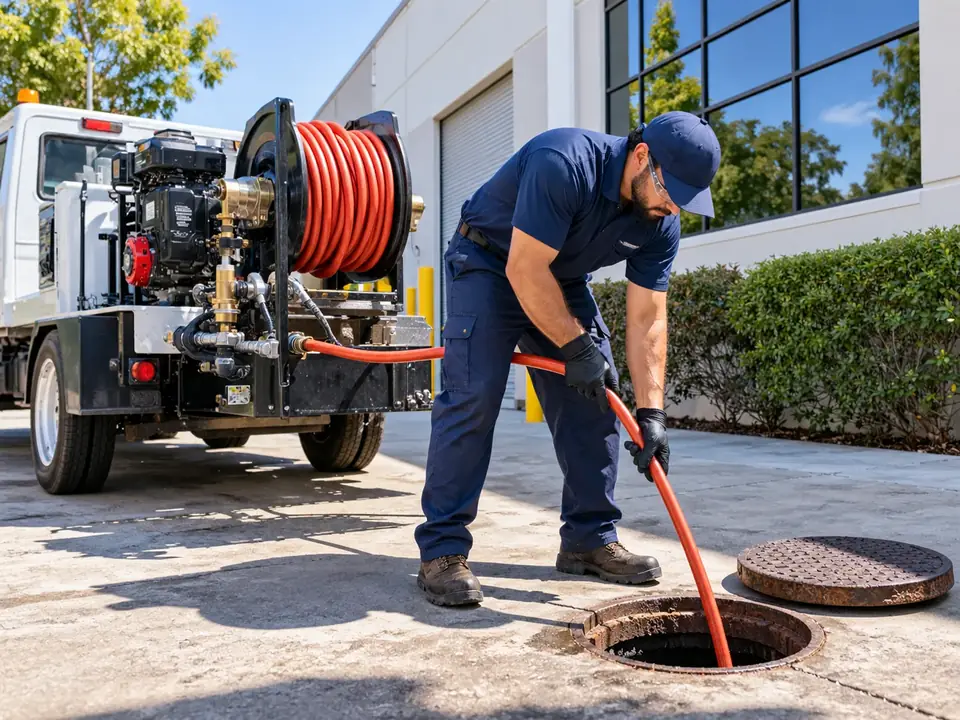
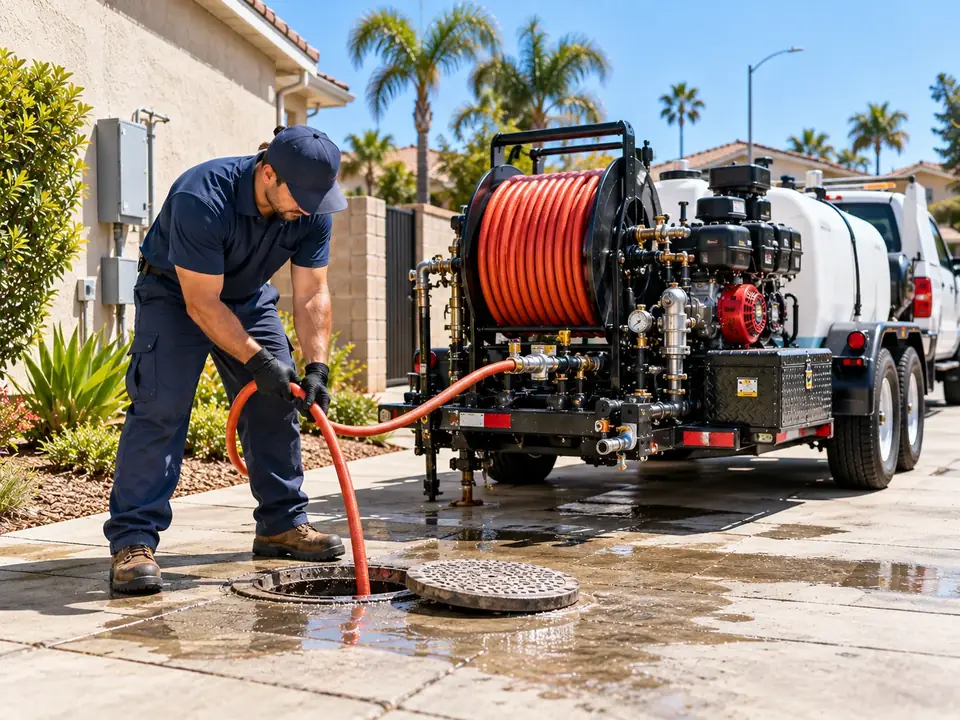
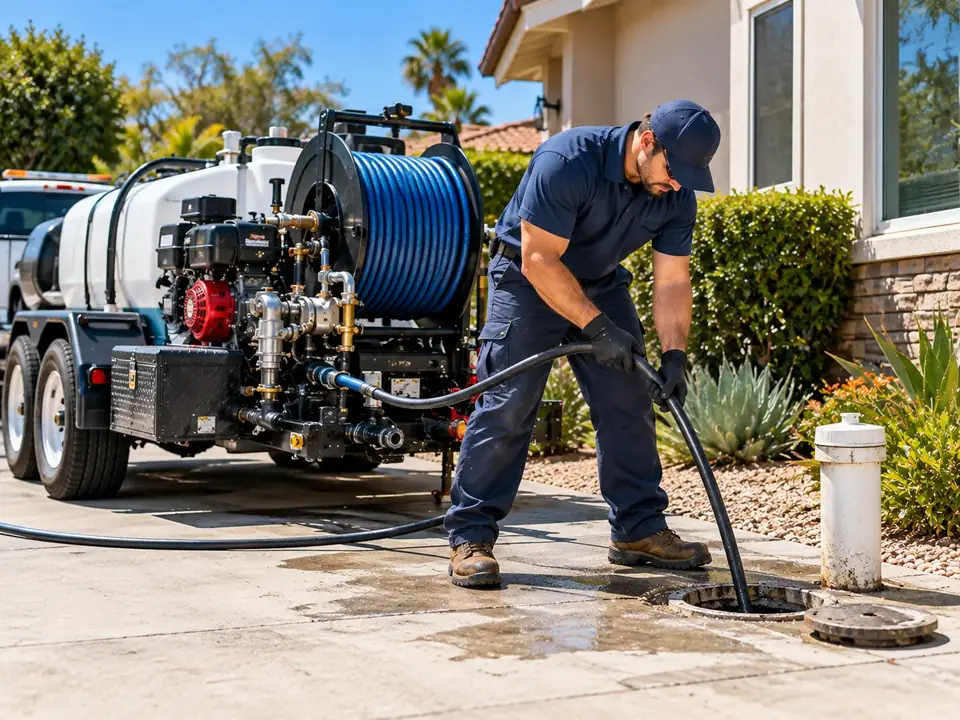
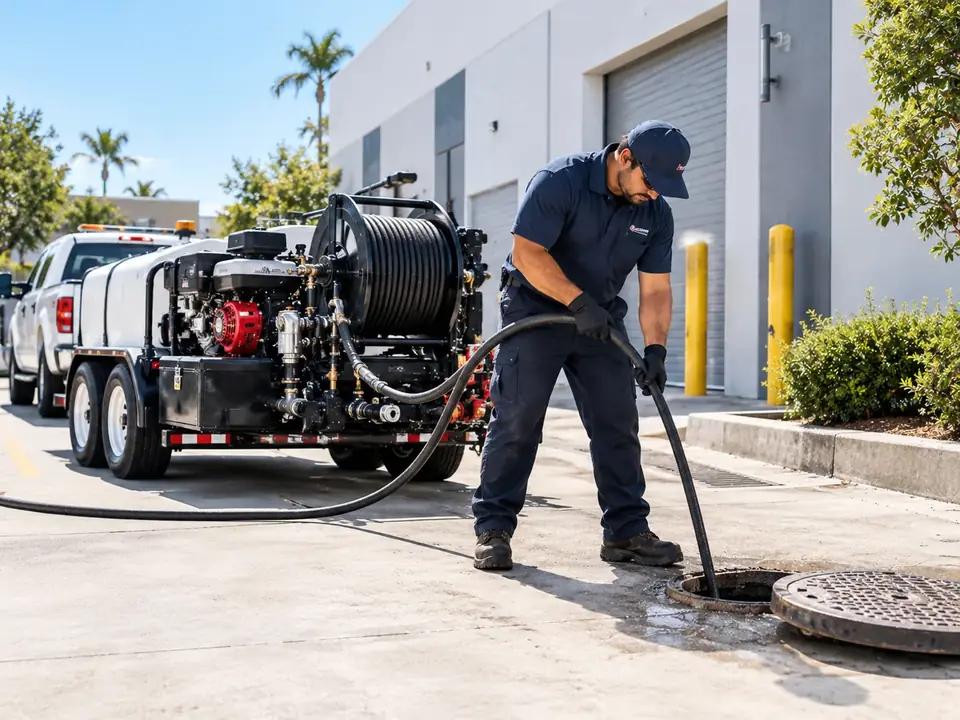
A cable snake bores a channel through the middle of the grease. Water flows again, but most of the deposit stays on the pipe wall — and fresh grease bonds to it quickly. That’s why grease clogs so often come back in weeks. Jetting uses a rotating or multi-orifice nozzle to scour the full circumference, then flushes the loosened material downstream.
Where we find grease problems
- Home kitchens — especially after holidays, family gatherings, and households that fry often.
- Restaurants and food service — the line between kitchen fixtures and the grease interceptor, plus floor drains.
- Apartment buildings — shared kitchen stacks where many households contribute.
- Low spots and sags in sewer laterals, where grease and sludge settle and harden.
Snaking leaves the coating behind. Call to ask whether jetting your kitchen or sewer line makes sense.
What jetting can and can’t do
Jetting removes grease, sludge and soft scale from a sound pipe. It cannot fix a sag that keeps collecting grease, and it doesn’t replace grease interceptor pumping for restaurants. If grease is settling in a belly in the line, a camera inspection will show it — and you’ll get a realistic picture of how often cleaning will be needed versus what a repair would cost.
Reduce repeat grease problems
- Pour cooled cooking grease into a can or jar and put it in the trash.
- Wipe pans with a paper towel before washing.
- Don’t rely on hot water or dish soap — they only move grease farther down the line before it hardens.
- Restaurants: train staff on scraping, keep strainers in floor drains, and keep interceptor pumping on schedule.
Read more: why kitchen sinks clog with grease and how grease affects commercial drains.
Signs grease is building up in your line
- The kitchen sink drains slower week by week rather than clogging suddenly.
- The second basin fills when the dishwasher drains.
- A sour or rancid smell rises from the kitchen drain.
- Gurgling from the sink when other fixtures run.
- A snake comes back coated in a gray, waxy paste.
Homes vs. restaurants: same problem, different scale
In a home, grease buildup usually takes years and lives mostly in the kitchen branch and the first stretch of the main. One thorough jetting and better habits often solve it for a long time. In a restaurant, the same buildup can form in weeks, it extends through floor drains and the line to the interceptor, and the consequences of a backup are far more expensive. That’s why commercial kitchens typically move to a scheduled cleaning plan while most homes don’t need one.
Serving Whittier neighborhoods
Grease & Sludge Removal is available throughout Whittier ZIP codes 90601–90606, including Uptown Whittier, East Whittier, South Whittier, West Whittier, Whittwood, Michigan Park, The Quad, Friendly Hills, Valla. Call with your address to confirm scheduling.
Frequently asked questions
Does hot water and dish soap prevent grease clogs?
Not reliably. They keep grease liquid for a short distance, then it cools and sticks farther down the line — often where it’s harder to reach.
How do I know if grease is the problem?
Kitchen sinks that slow gradually, gurgle, or smell sour are typical signs. A camera inspection shows grease as a pale, waxy coating on the pipe wall.
Can grease damage pipes?
Grease itself mainly restricts flow, but blockages lead to backups and overflows, and acidic decomposition byproducts can contribute to corrosion in metal pipes over time.
Do restaurants need jetting if they pump the grease interceptor?
Usually yes. Pumping empties the interceptor; it doesn’t clean the pipes between the fixtures and the interceptor, where grease builds up too.