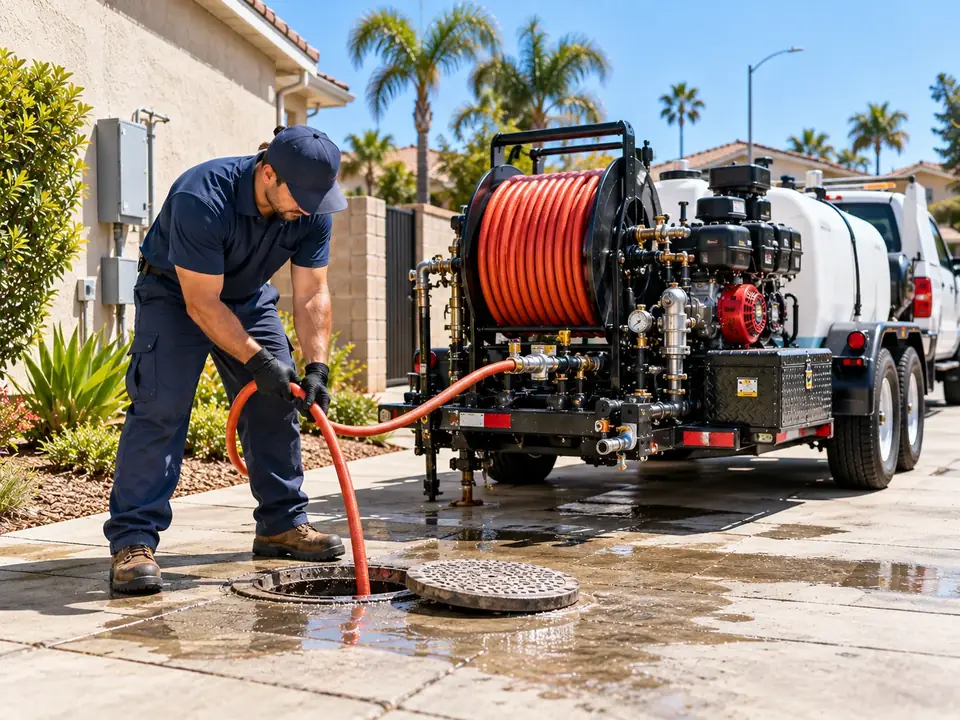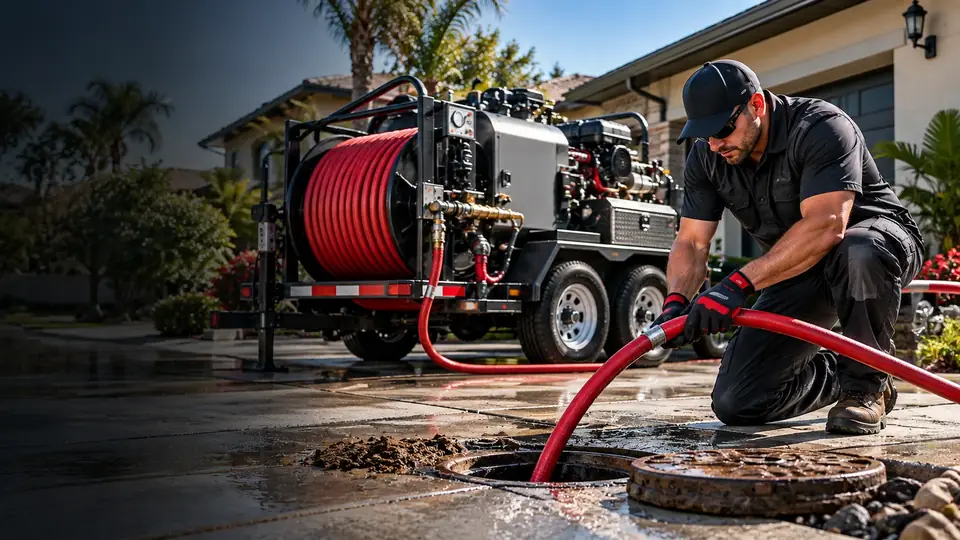
Why Whittier has a root problem
Whittier was an agricultural town before it was a suburb. Citrus and walnut groves covered much of the land — Whittier was once the nation’s largest walnut grower — and after World War II those groves were subdivided into the neighborhoods of East Whittier, Friendly Hills and beyond. Many yards kept a few fruit trees, and the street trees planted with those subdivisions are now 60 to 70 years old.
Underneath, those same homes were connected with vitrified clay laterals, made in short sections joined with mortar or early gaskets. Older homes near Uptown have clay that is older still. Every joint is a potential entry point, and decades of soil movement — including the 1987 Whittier Narrows earthquake — have opened plenty of them.
How roots get in
- A joint develops a hairline gap. A trace of warm, nutrient-rich water seeps out.
- Feeder roots nearby sense the moisture and grow toward it.
- A root hair slips through the gap into the pipe, where it has unlimited water and nutrients.
- It grows into a dense mass that catches paper, grease and debris — and the line starts to slow.
- As the root thickens, it can widen the gap or crack the pipe.
Southern California’s long dry season intensifies this. In late summer and fall, a leaking sewer joint may be one of the most reliable water sources a tree can find.
Trees most often involved
- Ficus — aggressive, wide-spreading roots; a frequent culprit in Southern California.
- Sycamores, elms and willows — large, thirsty trees.
- Eucalyptus and pines — extensive root systems.
- Citrus and avocado — smaller trees, but often planted close to the house and sewer.
- Jacaranda and other mature street trees in parkways above the lateral.
Shrubs and vines with shallow, fibrous roots can also cause trouble near shallow sections.
Warning signs
- Main line slowdowns that recur every year or two, often worse in late summer and fall
- Gurgling toilets and slow lower-level drains
- Root fibers on a cable after clearing the line
- A sewage smell or unusually lush patch of lawn along the sewer path
That tells you what’s happening at your joints. Call to schedule root cutting and a camera check.
Removal options
| Method | How it works | Notes |
|---|---|---|
| Hydro jetting with root-cutting nozzle | High-velocity water (sometimes with rotating chains) slices roots to the pipe wall and flushes debris | Cleans the whole pipe; good for fine roots plus grease and paper |
| Mechanical cutter on a cable | A rotating blade cuts through heavy root masses | Useful for dense masses; often followed by jetting |
| Root inhibitor treatment | Foaming products applied after cleaning to slow regrowth | Follow labels and local discharge rules; extends intervals, not permanent |
Long-term fixes
Cutting removes roots but leaves the openings. To stop regrowth, the joints have to be sealed:
- Spot repair — excavate and replace a short section with the worst joints.
- Cured-in-place lining — a resin-saturated liner is installed inside the cleaned pipe, creating a jointless pipe-within-a-pipe.
- Pipe bursting or replacement — new pipe replaces the old, typically HDPE or PVC with sealed joints.
Any of these starts with a thorough cleaning and a camera inspection. In the City of Whittier, lateral repairs also involve a Public Works permit with a lateral video review.
Prevention when planting
- Find your sewer path (from the cleanout toward the street) before planting.
- Keep large, thirsty species well away from it; choose smaller, less aggressive trees nearby.
- Consider root barriers when planting near the line.
- Don’t remove a healthy mature tree as a first step — sealing the pipe is usually cheaper and preserves the shade.
Frequently asked questions
Will root killer flushed down the toilet fix the problem?
Products can slow regrowth after a line is mechanically cleaned, but they won’t clear an existing root mass. Follow the label and local rules on what can be discharged.
How fast do roots grow back after cutting?
Commonly within one to three years, depending on the tree, season and size of the joint gaps.
Should I cut down the tree?
Usually not first. The roots already in the pipe remain after removal, and sealing or replacing the affected sections is often more cost-effective.
Related services
- Tree Root Intrusion CleaningRoots growing into old clay sewer joints cut back to the pipe wall with root-cutting jet nozzles — plus a plan to slow regrowth.
- Sewer Line Hydro JettingClean the lateral from your house to the street main — roots, grease and sludge removed, not just pushed aside.
- Preventive Drain MaintenanceScheduled jetting for restaurants, apartments and older homes — set by what the camera shows, not a sales calendar.
Call Precision Hydro Jetting. Describe the symptoms and get a straight answer on next steps.
Sources

Precision Hydro Jetting — drain and sewer cleaning for Whittier, CA. This guide is general information, not a diagnosis of a specific plumbing system; conditions vary by property.