What the research found
In 2019, a research project at Ryerson University — led by a longtime sewer inspector and supervised by a civil engineering professor — tested 101 single-use wipe products, 23 of which were labeled “flushable” by their manufacturers. None of them broke apart well enough to pass the disintegration test. Toilet paper, by contrast, starts breaking down within seconds of agitation in water.
How wipes cause clogs
- They stay intact. Wipes are made with strong fibers designed not to tear when wet.
- They snag. Any rough spot — a clay joint, an offset, a root, scale in cast iron — catches a wipe.
- They rope together. Wipes tangle with each other, hair and floss into rope-like masses.
- They combine with grease. Grease glues the mass together into a dense, heavy plug — often called a “fatberg” when it happens in public sewers.
Older Whittier sewer laterals — clay with many joints, or cast iron roughened by scale — give wipes far more to catch on than smooth modern pipe.
It’s not just your pipes
Wipes that make it past your lateral can clog public mains and foul pumps at lift stations and treatment plants. LA County Public Works asks property owners to keep laterals free of debris, and recurring wipes problems can lead to backups that affect neighbors as well as your home.
Stop flushing and call. Wipes clogs usually need to be pulled or jetted out.
What’s safe to flush
Only the “three Ps”: pee, poop and (toilet) paper. Everything else belongs in the trash, including:
- Baby wipes, cleaning wipes, makeup wipes and any “flushable” wipe
- Paper towels and facial tissues (designed to stay strong when wet)
- Feminine products and condoms
- Cotton balls, swabs and dental floss
- Cat litter, even “flushable” varieties
- Medications (use a take-back program instead)
Clearing a wipes clog
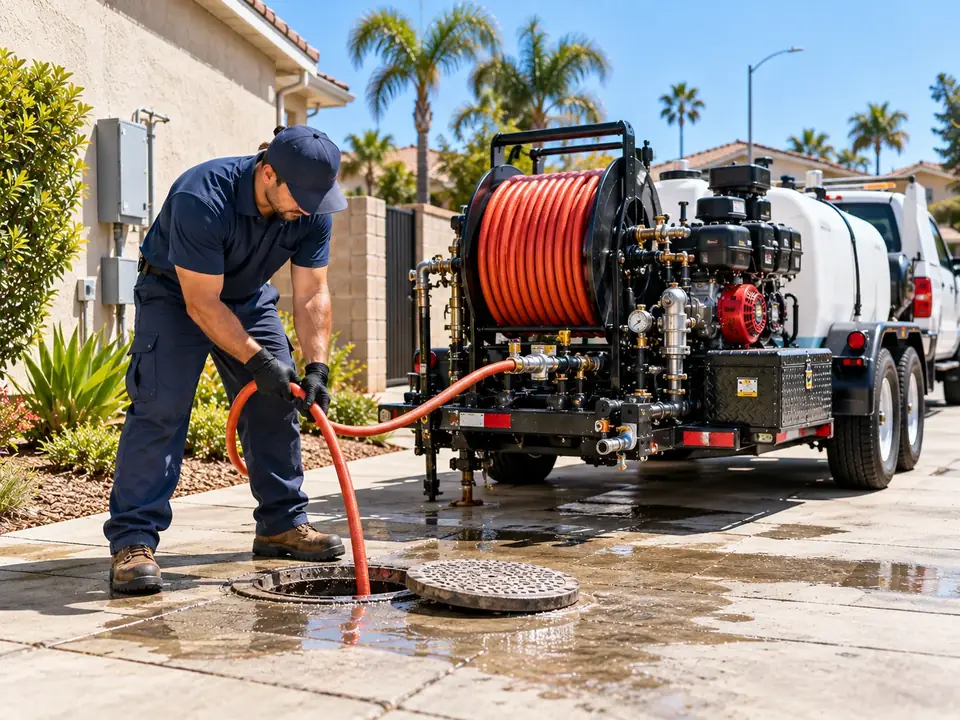
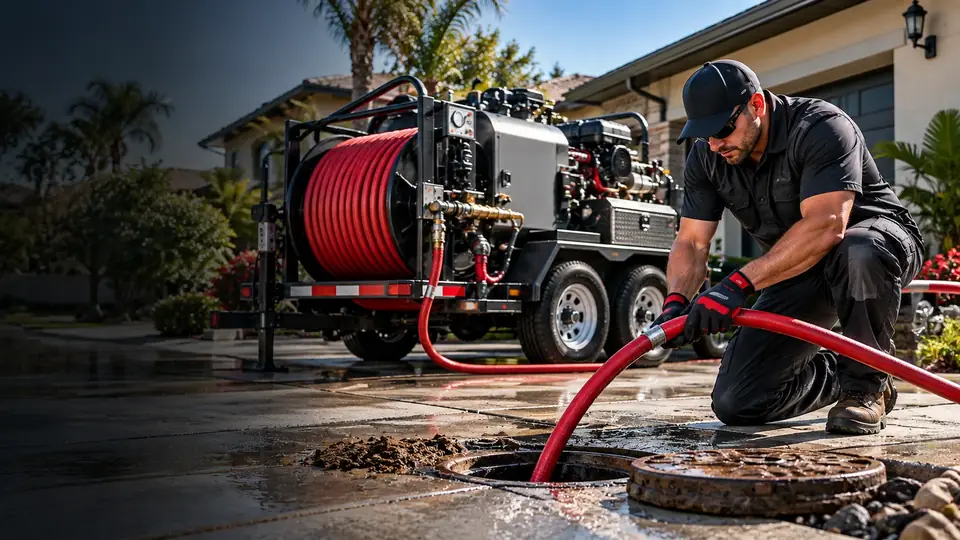
A wipes clog near the toilet can sometimes be cleared with a closet auger. Deeper in the line, wipes may need to be pulled out with a cable or broken up and flushed with a jetter. Hydro jetting is effective at removing the grease-and-wipe masses that build up at joints and low spots. If wipes keep catching at the same point, a camera inspection will show the joint or root that’s snagging them.
Making it easy for everyone
- Put a lidded trash can next to every toilet.
- If you use wipes, keep the package next to the trash, not the toilet.
- Post a small reminder in guest baths and rental units.
- Businesses: signage in restrooms makes a measurable difference.
Frequently asked questions
Are any wipes truly flushable?
In the 2019 Ryerson University testing, none of the wipes labeled flushable broke down adequately. Treat all wipes as trash.
Will one wipe clog my toilet?
Not usually by itself, but wipes accumulate at joints and rough spots, and repeated flushing builds a blockage over time.
Can hydro jetting remove wipes?
Yes. Jetting breaks up and flushes wipe-and-grease masses, though a single large wad near the toilet may be faster to pull out with an auger.
Related services
- Main Sewer Line CleaningSeveral drains backing up at once? Clear the main line fast and find out why it happened — before it happens again.
- Recurring Drain Clog RepairSame drain, same clog, every few months? We find the cause behind the pattern and fix that — not just the symptom.
- Sewer Line Hydro JettingClean the lateral from your house to the street main — roots, grease and sludge removed, not just pushed aside.
Call Precision Hydro Jetting. Describe the symptoms and get a straight answer on next steps.
Sources
- Toronto Metropolitan University — What not to flush (2019 wipes study)
- LA County Public Works — Sewer Maintenance Customer Information

Precision Hydro Jetting — drain and sewer cleaning for Whittier, CA. This guide is general information, not a diagnosis of a specific plumbing system; conditions vary by property.